
Waterproofing stone veneers installations in rainy climates like pittsburgh
June 11, 2025 | AAA Stone Age, Stone installations in rainy climates
Why Waterproofing matters in rainy climates
How moisture effects stone veneer
Stone Veneer is one of the most popular materials in modern exterior design—and for good reason. But behind its curb appeal lies a critical factor many homeowners overlook: waterproofing.
In rainy climates like Pittsburgh, frequent storms and freeze-thaw cycles make waterproofing stone veneer essential. Without proper safeguards, water can seep behind the veneer—causing mold, structural damage, and costly repairs.
In this post, we’ll break down how to protect your stone installations. From Rainscreen systems to professional sealing strategies, you’ll learn the key building techniques that protect your home’s aesthetic and structural integrity—rain or shine.
- Waterproofing stone veneers installations in rainy climates like pittsburgh
- Why Waterproofing matters in rainy climates
- Understanding the Risks: How Moisture Affects Stone Veneer
- Strategy #1: Implement a Rainscreen System
- Strategy #2: Use a High-Quality Weather-Resistant Barrier (WRB)
- Strategy #3: Flashing and Drainage Done Right
- Strategy #4: Proper Mortar and Installation Techniques
- Strategy #5: Seal the Stone Veneer
- Special Considerations for Pittsburgh’s Climate
- Conclusion: Protect your Installation
- FAQ
Understanding the Risks: How Moisture Affects Stone Veneer
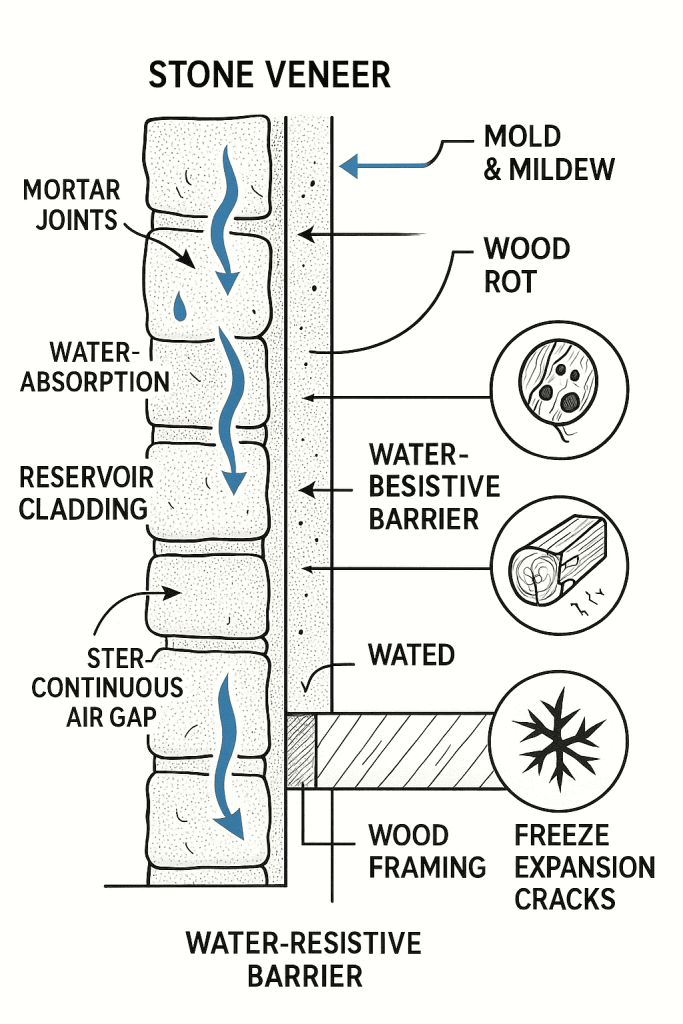
Stone veneer might look rock-solid on the outside, but it’s surprisingly absorbent beneath the surface. Both natural and manufactured stone veneers fall into the category of reservoir cladding—meaning they absorb and temporarily store water during rain or snow. This makes proper moisture control important, especially in climates where precipitation is constant.
So how does water become a threat? It usually starts small—water penetrates behind the stone through cracks in mortar joints, improperly sealed gaps, or simply by soaking through the veneer over time. From there, the trapped moisture gradually seeps deeper, eventually compromising the layers behind the stone—especially the insulation and wooden framing.
The consequences can escalate quickly. Mold and mildew thrive in wet environments, posing health risks and requiring expensive renovation. Wood rot weakens the structural core of a home. And in places like Pittsburgh, where winter brings freezing temperatures, any moisture that gets trapped and freezes can expand—causing the stone veneer to crack, flake, or even fall away entirely.
Waterproofing isn’t just about keeping things dry—it’s about preserving the strength, safety, and longevity of your home.
Strategy #1: Implement a Rainscreen System
A Rainscreen is a small air gap—usually between 3/8″ to 1″—that sits between the stone veneer and the weather-resistant barrier (WRB) behind it.
Here’s why it matters: Rather than soaking into the wall, water that gets past the stone cladding drains downward and evaporates. Airflow behind the stone also helps the system dry out faster after a storm—crucial in rain-heavy climates like Pittsburgh.
Key components of a proper Rainscreen system include:
- Drainage mats with built-in vertical channels to direct water down and out.
- Mortar-blocking fabric to prevent excess mortar from clogging drainage paths.
- Weep screeds installed at the base of the wall to let water escape and allow air in.
Basic Installation Overview:
- Start by installing the weather-resistant barrier over the sheathing.
- Attach a drainage mat over the WRB, ensuring vertical channels remain unobstructed.
- Install the weep screed at the bottom of the wall to act as a drainage exit.
- Apply stone veneer over the drainage mat, following manufacturer instructions carefully to avoid mortar buildup behind the stone.
A Rainscreen system adds a critical layer of moisture management that can save your stone veneer—and your structure—over the long haul.
Strategy #2: Use a High-Quality Weather-Resistant Barrier (WRB)
Think of the weather-resistant barrier (WRB) as your home’s raincoat. It’s a thin but powerful layer installed over the wall sheathing that stops water from infiltrating the structural core while still allowing trapped vapor to escape. In wet climates, this balance is key to preventing both leaks and condensation buildup.
There are two types of WRBs commonly used in stone veneer installations:
- Mechanically fastened options like Tyvek® house wrap.
- Self-adhered membranes that stick directly to the substrate and offer excellent sealing around nails and fasteners.
Best practices for WRB installation:
- Overlap in a shingle fashion: Each upper layer should overlap the lower layer to direct water downward and outward—never inward.
- Start at the bottom and work up: Begin by placing the WRB over the weep screed, ensuring moisture that drains behind the veneer can exit freely.
- Pay attention to vapor permeability: For climates like Pittsburgh, aim for a WRB with moderate permeability (10–20 perms). This allows moisture vapor from inside the wall to escape while still keeping bulk water out.
Installed correctly, a high-quality WRB acts as a reliable, passive moisture control system—protecting your structure, through every rainstorm and cold snap.
Strategy #3: Flashing and Drainage Done Right
When it comes to waterproofing, flashing is your first line of defense against water intrusion at high-risk areas like window sills, door frames, roof-wall intersections, and the base of the wall. It’s designed to redirect water before it can reach the interior of your structure.
Why is flashing so important? Because even the best WRB or Rainscreen system can’t protect your home if water slips in around openings or penetrations. Flashing acts like a gutter—directing runoff safely to the exterior and away from vulnerable wall components.
Key flashing tips for stone veneer installations:
- Placement matters: Install flashing at all horizontal breaks in the wall, including the base of the veneer, window/door openings, and roof-to-wall transitions.
- Types of flashing: Use corrosion-resistant metal flashing for long-term durability or flexible flashing tape for tricky corners and irregular shapes. Many pros use a combination of both.
- Integration is key: Flashing should be installed under the WRB at the top and over it at the bottom—creating a continuous water-shedding path. Read more on saladousa’s article!
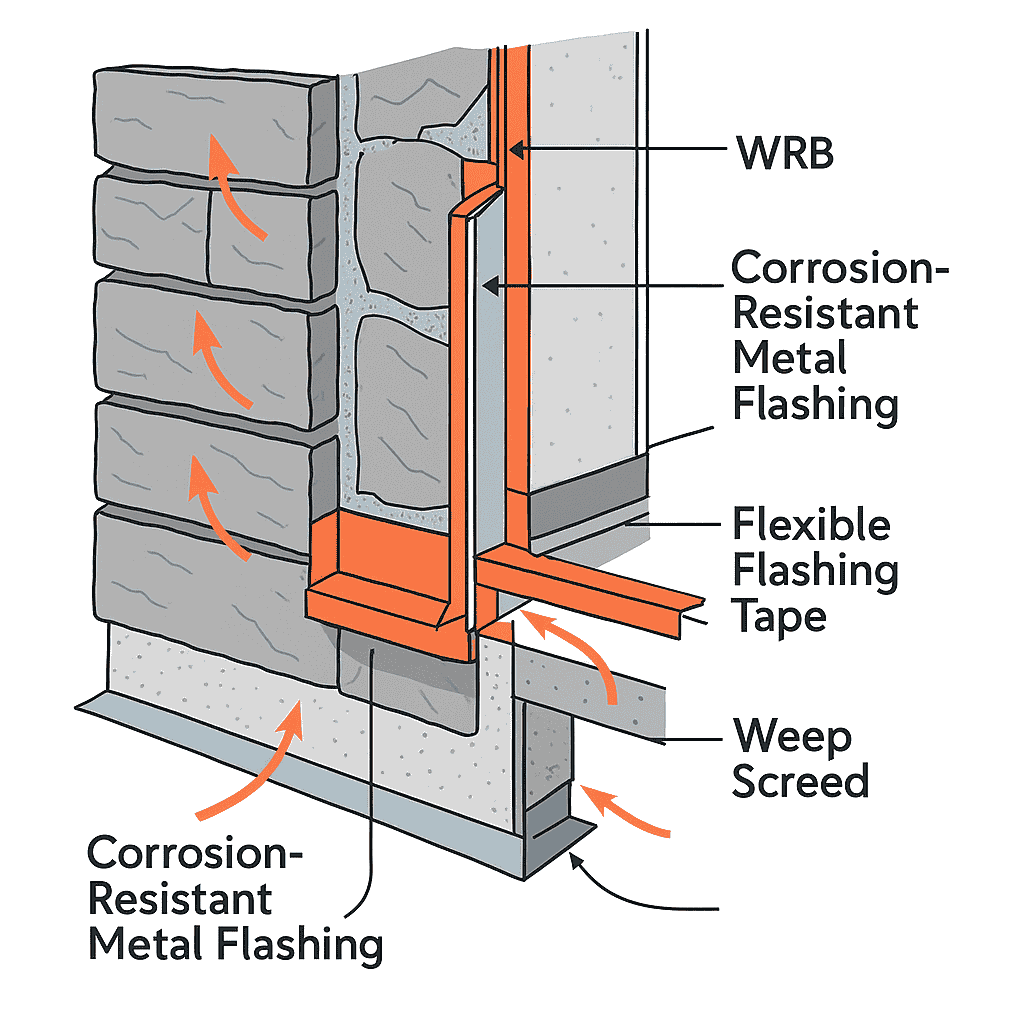
Don’t forget the weep screeds—they’re essential drainage components installed at the bottom of the wall. These allow water to drain from behind the veneer and introduce fresh airflow, reducing the chance of trapped moisture. In freeze-thaw climates like Pittsburgh, weep screeds are not optional—they’re mandatory.
Strategy #4: Proper Mortar and Installation Techniques
Even with the right drainage systems in place, poor mortar work can ruin the whole job. Mortar isn’t just about adhesion—it’s also a potential leak point for water if not handled correctly. The goal is to eliminate any pockets where water can pool and to ensure the veneer is firmly bonded without compromising ventilation.
Here’s what proper mortar installation looks like:
- Full coverage: Each stone should be back-buttered with a full mortar bed to prevent air gaps where water could collect. Partial contact can lead to loose stones, moisture buildup, and early failure.
- Avoid “dot and dab”: Spotting mortar in only a few places might be quicker, but it leaves hollow cavities that invite water in.
- Match with drainage systems: For adhered thin stone veneer, always install over a drainage mat or entangled mesh. This ensures an air gap behind the stone and gives water a way out.
Finally, skilled installation is key. A professional mason knows how to angle flashing, feather mortar, and leave expansion gaps—all details that matter more than you’d think. In climates like Pittsburgh’s, one small error can be the difference between a beautiful, long-lasting façade and one that starts to fail in just a few seasons. Ready to ensure your stone veneer is built to last? Trust the expertise of professional masons who know the ins and outs of waterproof installations. Contact us today for a free quote and let’s protect your home the right way.
Strategy #5: Seal the Stone Veneer
Why seal?
Sealing reduces water absorption, minimizes staining, and protects against freeze-thaw damage. It also helps prevent biological growth like algae or moss in damp, shaded areas—something homeowners in rainy regions often battle.
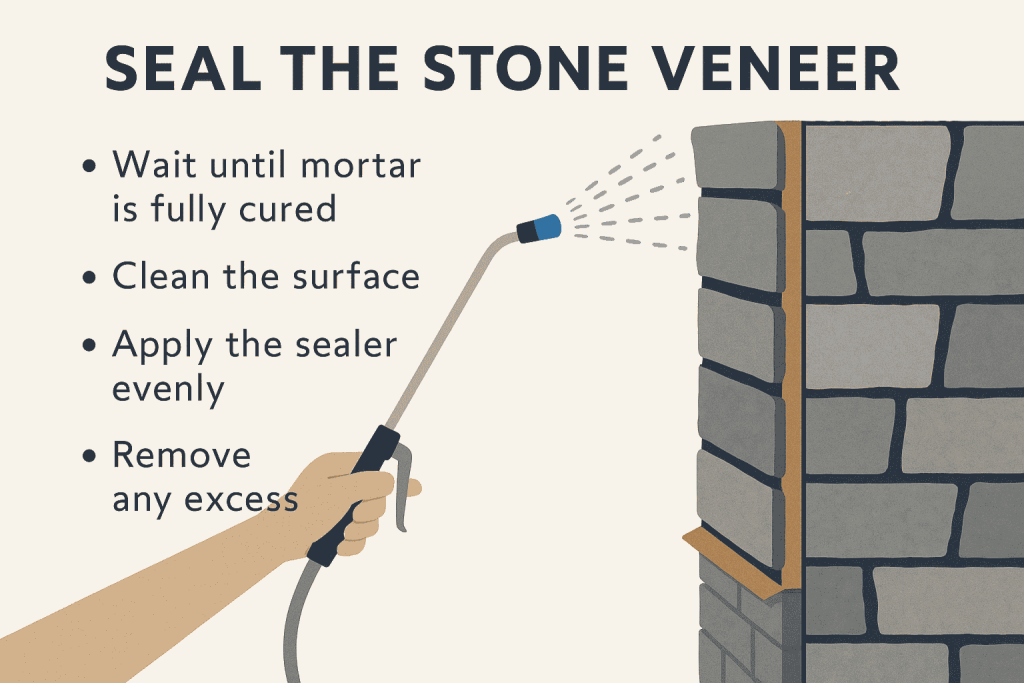
How to apply a sealer:
- Wait until the mortar has fully cured (usually 28 days).
- Clean the surface of dust, dirt, and debris.
- Use a low-pressure sprayer, roller, or brush to apply the sealer evenly.
- Let it absorb, then remove any excess with a clean cloth to avoid blotching.
Maintenance tip:
Reseal every 3 to 5 years, or as recommended by the manufacturer. Inspect annually for signs of water penetration, efflorescence (white residue), or cracks in the mortar. Address any issues promptly to prevent long-term damage.
Sealing is quick, cost-effective, and adds serious mileage to your stone veneer’s lifespan.
Special Considerations for Pittsburgh’s Climate
If you live in Pittsburgh or a similar region, you’re no stranger to weather extremes—driving rain, heavy snowfall, and frequent freeze-thaw cycles. These conditions pose unique risks to stone veneer installations that demand extra attention.
Freeze-thaw damage is the silent destroyer.
When moisture seeps behind the veneer and temperatures drop, that water freezes, expands, and puts immense pressure on the stone and mortar. Over time, this causes cracking, spalling, and even complete bond failure.
That’s why ventilation and drainage aren’t just best practices—they’re non-negotiable in Pittsburgh. Every layer of the system, from Rainscreens to WRBs to weep screeds, must work together to keep water moving out and air moving in.
Quick Reference: Best Practices Summary Table
| Step | Purpose | Key Products/Components |
| Rainscreen System | Promote drainage and ventilation behind veneer | Drainage mat, vertical channels, mortar-blocking fabric, weep screed |
| Weather-Resistant Barrier (WRB) | Block bulk water, manage vapor transmission | Tyvek®, self-adhered membranes (10–20 perms), shingle-style layering |
| Flashing & Drainage | Redirect water away from wall openings | Metal flashing, flexible flashing tape, weep screeds |
| Mortar & Installation Techniques | Prevent water pockets, ensure proper adhesion | Full mortar bed, entangled mesh, skilled installation |
| Sealing & Maintenance | Repel moisture, prolong veneer lifespan | Penetrating stone sealer, inspection & resealing every 3–5 years |
Bonus Tip: Don’t forget your landscaping.
Water pooling at the base of your stone veneer can bypass all that careful waterproofing. Make sure the ground slopes away from the building foundation. Add proper gutters and downspout extensions to divert rainwater—and reduce splash-back that wears on the lower wall.
Conclusion: Protect your Installation
Stone veneer brings curb appeal to homes across Pittsburgh and beyond—but in rainy, freeze-prone regions, beauty alone isn’t enough. Without proper waterproofing, what starts as a cosmetic upgrade can quickly become a costly headache.
From Rainscreens and WRBs to flashing, mortar precision, and sealing, each layer of protection plays a vital role in defending your home from water intrusion and weather damage. These aren’t just nice-to-haves—they’re necessities in climates that throw everything from soaking rains to snowmelt your way.
Whether you’re a homeowner planning a new installation or a contractor learning new skills, following these best practices ensures your stone veneer stands strong for decades. Ready to protect your project the right way?
Contact us today for a free quote to make sure your next build is waterproofed from the ground up.